
Once reduced to a relic of their former numbers by a veterinary drug, India’s critically endangered vultures are finally edging back — but a landmark new survey reveals how far the recovery still has to go.
The Wildlife Institute of India (WII) recently published the country’s first comprehensive Pan-India Assessment and Monitoring of Endangered Species report on vultures, the result of two years of fieldwork conducted between February 2023 and January 2025. The findings are sobering: of 425 historically documented nesting sites surveyed across 25 states, active nesting was confirmed at only 120. Researchers identified a further 93 new sites, bringing the current total to 213 — but that still means roughly 72 per cent of the country’s historical vulture nesting habitat now stands empty.
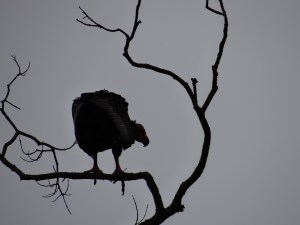
A species silenced, state by state
India is home to nine vulture species, of which four — the White-rumped Vulture, Indian Vulture, Slender-billed Vulture, and Red-headed Vulture — are Critically Endangered on the IUCN Red List. Their near-collapse in the 1990s is one of the fastest wildlife declines ever recorded: driven almost entirely by diclofenac, a veterinary painkiller given to cattle that proved lethal when vultures fed on treated carcasses. Fewer than one per cent of contaminated carcasses was sufficient to trigger catastrophic population crashes. India banned the veterinary use of diclofenac in 2006, followed more recently by related toxic NSAIDs including ketoprofen and aceclofenac.
The WII report, however, makes plain that the ban alone has not been enough. The Slender-billed Vulture has fared worst of all: it no longer nests at any of its 47 historical sites. Its entire surviving breeding population — a mere 20 active nests — is now confined to 12 newly identified locations in Upper Assam, perched in silk cotton trees on dwindling floodplain forests. The White-rumped Vulture, once India’s most common vulture species, has lost 90 per cent of its known nesting sites. The Red-headed Vulture, solitary and territorial, was found at just five newly mapped locations in Madhya Pradesh and Rajasthan. Feral dogs, increasingly dominant at carcass dumping grounds across nine states surveyed, are displacing vultures from their last reliable food sources — a threat the report urges conservation planners to address urgently through carcass management policy.
Assam holds the line
Even as the WII assessment laid bare the scale of loss, 2026 has brought a clutch of encouraging interventions. In January, 35 captive-bred vultures — 30 White-rumped and five Slender-billed — were released into Kaziranga National Park in Assam by the state forest department, following years of breeding at the Vulture Conservation Breeding Centre in the nearby village of Rani. All birds were GPS-tagged for intensive monitoring. Assam’s Brahmaputra floodplains have been confirmed to carry low levels of toxic veterinary drugs — a prerequisite for any reintroduction — and Bombay Natural History Society (BNHS), which manages the Rani breeding centre with support from the Royal Society for the Protection of Birds, considers the site one of the most suitable in the country for vulture recovery.
In March, the Assam State Forest Department took a further step, releasing six additional captive-bred White-rumped Vultures fitted with GPS-GSM transmitters at the Vulture Reintroduction Aviary in Rani Range. Four rehabilitated wild vultures were released alongside them. The transmitters will track how the birds use the landscape, identify feeding grounds and high-risk zones, and help guide where future, larger-scale releases should be directed.
Mapping the flight paths
Madhya Pradesh — which, together with Rajasthan, accounts for roughly 63 per cent of all vulture nests remaining in India — launched its own satellite telemetry programme in February 2026. On 23rd February, the state’s Chief Minister released five rescued raptors at Halali Dam, near Bhopal: four Indian Vultures and one Cinereous Vulture, all fitted with high-precision GPS-GSM transmitters. The programme, run in collaboration with WWF-India and BNHS, aims to trace how vultures move through central India’s complex mosaic of protected areas, farmland, and infrastructure — and to identify the electrocution risks and poisoning hotspots that still threaten them.
The Cinereous Vulture, a migratory species, is of particular interest: it migrates along the Central Asian Flyway, one of the world’s great avian corridors spanning 30 countries. Understanding where these birds travel during their migration — and where they are most at risk — has implications not just for India but for international conservation cooperation.
Safe zones, and the battle against banned drugs
Meanwhile, in Tamil Nadu, a February 2026 workshop convened by the Sathyamangalam Tiger Reserve Forest Division marked a significant shift in how India is approaching the Vulture Safe Zone (VSZ) concept. For the first time, the state is working toward a formally recognised, state-backed safe zone framework for the Nilgiris landscape — a stronghold for White-rumped, Indian Long-billed, and Red-headed Vultures. The workshop brought together the Department of Drug Control, Animal Husbandry officials, cattle associations, and conservation NGOs including Arulagam, a SAVE partner.
The conversation was frank about a persistent problem: despite bans, vulture-toxic drugs including diclofenac, aceclofenac, ketoprofen, flunixin, and nimesulide are still available illegally through some veterinary pharmacies. The workshop proposed a certification scheme for vulture-safe pharmacies, and called for stricter enforcement against those continuing to stock prohibited NSAIDs. This kind of last-mile enforcement — ensuring the ban actually reaches the cattle shed — remains one of the most critical and least visible parts of India’s vulture recovery.
Nature’s clean-up crew
Vultures are sometimes treated as the unglamorous end of Indian wildlife — not the tiger or the elephant, not even the snow leopard. But their ecological role is irreplaceable. A single vulture can strip a carcass in minutes; a colony can process a dead animal faster than almost any other scavenger on earth. When India’s vultures crashed in the 1990s, the consequences rippled outward: feral dog populations surged as carcasses went unprocessed, and rabies cases climbed. A 2024 study in the American Economic Association Journal calculated the human health toll of the vulture collapse in economic terms — and found it catastrophic.
India has spent two decades trying to undo the damage of one veterinary drug. The WII’s first national assessment gives conservationists, for the first time, a precise map of what remains and what has been lost. The releases in Assam, the satellite tags over Madhya Pradesh, the workshops in Tamil Nadu — these are the pieces of a painstaking recovery effort, playing out one nest, one bird, one safe zone at a time.
Sources: Wildlife Institute of India — Pan-India Vulture Assessment 2025 | WWF-India | SAVE Vultures — Assam Release | SAVE Vultures — Tamil Nadu | The Cooldown — Kaziranga Release | Down To Earth
 indiawildlifenews.com